Jimmy Burroughes, a former military leader who has done performance improvement work inside companies like Samsung, LEGO, and Bank of America, has a blunt read on the executive team that’s busier than ever and producing less: they’re already pulling as hard as they can. The drag is coming from friction nobody has bothered to remove. Piling on bigger goals doesn’t fix that. It gives you a more exhausted team delivering the same output.

The image he uses to describe that point with leadership teams is a rowboat. Everybody’s straining at the oars and facing a slightly different direction. Nobody’s in time with anyone else, the hull is sitting in seaweed, and there’s still a rope tied to the dock. Rowing harder solves exactly none of those problems.
When he asks leaders to identify the lowest-effort, highest-impact item on their to-do list, most of them can’t answer, because they’ve never sorted the list that way. They start at the top, work down, and hope.
What Happens When One CEO Tries to Multitask for the Whole Company?
Burroughes spent about a year and a half with a CEO who carried 20 projects in his head at once. He launched new ones constantly, and dipped his fingers into all of them to make sure they were running well.
His leadership team couldn’t tell what the priority was on any given day. The definition of success moved every week and leaders stopped finishing things because something new kept landing on top of the last thing.
The intervention involved one project per week for the whole leadership team, with every available resource pointed at it. Anyone not involved got the week back to build their own business unit. “Not seventeen things a week, just one.”
Six months into that cadence, every member of the executive team reported getting more done in their own unit because they weren’t carrying the CEO’s overflow. Collectively they’d delivered more than any comparable stretch. Absenteeism dropped, engagement rose, profitability rose, and stress markers moved too: “Cortisol levels were down. We did blood tests on people.”
Here’s the part worth sitting with: while multitasking looked like leadership to outsiders, it felt like chaos in every seat below. That CEO’s habit of touching everything was the single largest source of friction in his own company. It never showed up on any report, because there’s no line item for the cost of a boss changing his mind.
Complexity and Clutter

Burroughes diagnoses overcomplication by walking down the org chart rather than reading the strategy deck. The first tell is employee turnover.
The second tell shows up when he talks to the survivors. They look strung out and can’t name what the team’s priorities are because everything qualifies.
The third tell sits a layer below that, where people say they just turn up and do their jobs. They still care. They aren’t disengaged. They’re rowing without knowing where the boat is headed. Nothing connects their days to anything the leadership team decided. They make reasonable local decisions that pull the boat in directions the CEO never chose. Burroughes traces that straight back up the org chart because a lack of clarity usually gets passed down through the business.
Most of what gets called complexity is an accumulation of decisions that haven’t been made yet. He watched a room of organizational development leaders reach for elaborate, elegant solutions to something none of them had defined yet. The question that kept resetting the room was simple: “Well, what’s the business problem you’re actually trying to solve?”
What Should You Do When the CEO Keeps Adding to Your Plate?
Burroughes gets this question in every workshop. His answer is a set of three gates he calls PVC: purpose, value, capacity. Purpose splits into two questions.
- What’s the purpose of this work?
- What’s the purpose of me being the one doing it?
The second one is where most overloaded managers get caught.
Executives are usually drowning because they never learned to hand work off, or they don’t trust anyone else with it. His experience is that the CEO rarely meant for them to do it personally. The instruction was to own the outcome.
Value is where he gets specific enough to be uncomfortable. If one project moves $10 million in revenue and another moves $1 million, your energy has an obvious address. Then there’s the value of your own hour, which he calculates by dividing annual salary by 2,080. Call it $50 an hour. If you’re spending that hour on work you could pay someone $15 an hour to do, stocking the supply cupboard or answering social media comments, you’re not doing the high-value work your CEO needs from you. No amount of staying late fixes the arithmetic.
Capacity is the gate almost everybody skips. His tool for it is a conversation, not a spreadsheet. Read to your boss the entire list of what you’re carrying, ask which three matter most to him, and then tell him what you’re going to stop, slow down, or swap to make room.
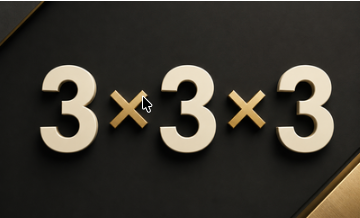
Follow it with what he calls the three by three by three:
- three things achieved this week
- three priorities for next week
- three things you need from him
Most executives, he says, have no idea what their leadership teams are carrying, which makes the reading of that list the whole point. As he puts it, “Your to-do list should now become the whose-to-do list.”
A senior Amazon leader once laid out the same math for a room of retail executives Burroughes was working with. His day starts at four in the morning and brings between 1,500 and 2,500 emails. Roughly 200 things are going wrong inside them, and about 20 are genuine crises. He can address five.
The skill that keeps him employed isn’t working faster. It’s knowing which fire he shows up for himself and which one gets a junior firefighter, partly because that’s how junior ones learn to fight bigger fires.
Trust Is the Constraint Nobody Puts on the Board
One team Burroughes worked with had been together so long that the newest member had been on the team for four years. And, they still didn’t trust each other. They ran their meetings as a series of status reports from functional heads rather than a conversation about how to run the business. In the room they agreed. Outside it, they undermined each other, protected their own units at the expense of the next one, and positioned for a CEO seat they all assumed would open soon.
The repair started somewhere that sounds too soft to matter. They didn’t know each other. They couldn’t say who had kids, whose kid was disabled, who was allergic to Thai food, who spent weekends making pizza.
From there he pushed decisions into the open, sending the CFO to explain the budget to the marketing team and the sales GM to talk through the pipeline with operations. Finally, managers in operations started asking how they could help sales hit a number that wasn’t theirs. Then came the rule they all signed: “We argue in this room; when we go out, we’re a unified front.”

Constructive conflict inside, one voice outside, in place of the older arrangement where everyone nodded in the meeting and relitigated it in the hallway. It took three or four months of small, cumulative changes, and the culture of the business moved.
A man I worked for years ago told me decisions are only as sound as the facts they’re based on. That’s why trust is an operating issue, not a team-building exercise. If your people can’t tell you the truth without paying a price for it, you’ve trained them to sand the edges off bad news and exaggerate the good news. Every decision after that gets made on a version of reality your own team edited for your comfort.
What Is the Cheapest Way to Get Hours Back This Quarter?
Burroughes teaches one question on day one of nearly every program he runs. It costs nothing to deploy: “What do you suggest?” He closed out a program with a dairy company recently where the group freed up 23.5 hours a week of collective time on the strength of that question alone, just by asking the people who already knew instead of supplying the answer themselves.
His one piece of advice for owners and CEOs follows from it: you’re not paid to be the expert anymore. You’re paid to make good decisions. The fastest route to a good decision is the smartest people you can get in a room and a genuine willingness to use what they say.
A leader who insists on having every answer eventually gets a team that stops offering any. He’ll read that silence as confirmation he was right to answer everything himself.