You keep taking it back, and the company keeps rewarding you for it. Tanya Anne Chavez, a former Air Force jumpmaster who now coaches executives, calls this the superhero leader, the one who charges in, fixes it, saves the day, and then sits exhausted wondering why nobody else carries the load.
Stepping in and fixing the thing yourself is the most comfortable move available to you, since you already know you can do it. Letting someone else carry it is the move that costs you something. Most leaders wouldn’t frame their own heroics as risk avoidance.
What Are Unsaid Ideas Costing You?

Chavez points to work by Karin Hurt and David Dye, who asked thousands of employees whether they were sitting on an idea they’d never shared with their boss. About half said yes. Half of your employees are walking around with something they decided wasn’t worth the risk of saying out loud.
The physical version is familiar to anyone who’s been in a meeting where the wind was blowing one direction. You have something that would change where the discussion lands, you get a pit in your stomach, and you swallow it. Nothing dramatic happens. The meeting simply ends without the contribution that might have made it useful.
What gets me about this is the invoice companies pay instead. The same executive who can’t get candor out of the people who know the business will write a check to a consulting firm to go find out what those people think, then present it back as a finding. The answers were already in the building.
Why Doesn’t the Offsite Fix It?
Chavez has no argument with retreats, escape rooms, or axe throwing. She’ll tell you they build camaraderie. What she’ll also tell you is that they’re treating a surface problem. The effect is motivational where the situation calls for something structural. A day of fun doesn’t reach the thing that made someone swallow their idea on Tuesday.
Her framing is that if a person’s nervous system has concluded it isn’t safe to speak in that room, no group activity is going to overrule it. The Band-Aid holds until the next high-stakes meeting, everyone reverts, and leadership concludes the team is disengaged. The content of the offsite was never the issue.
You can watch the same dynamic run in the other direction when the leader is the source. Chavez worked with a VP his team called the Tasmanian devil. He’d blow into a room, scatter ideas everywhere and let his energy set the tempo. “They would start to confuse movement with momentum.”

Whatever state the leader walks in carrying gets multiplied by everyone in the room. It’s why the temperature at the table is a leadership output rather than an accident.
Which Person in the Room Is Playing It Safe?
Chavez’s own answer to that question took her years to see. She arrived at the Air Force Academy as a painfully shy kid. The academy exists to build leaders, so leadership roles kept getting offered. She kept turning them down with a line that sounded like maturity: she’d lead when it mattered. The job she took instead was morale, welfare, and recreation: planning parties and tailgates, with no squadron to run and no briefings to give.
Then she made the parachute team. Everyone assumed she was brave since she was jumping out of airplanes. Nobody asked again why she kept declining command roles. What she was avoiding wasn’t danger. It was scrutiny and the criticism that comes with a leadership position, a fear she describes as sitting in the bones rather than the head.
Years later, one executive she took through her wind tunnel training was running the same play in a suit. He told her he steps in, fixes things, and his team won’t step up. He couldn’t tell whether they were lazy or unmotivated. “That was his way of playing it safe.” Doing it himself, his way, was the option that couldn’t hurt him.
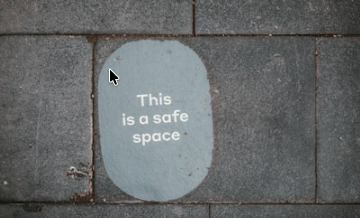
Ask which behavior in your company is being praised as courage while quietly functioning as avoidance. Is there a founder who won’t hand off the client relationship, a manager who rewrites every deliverable, an executive who takes the hardest problem home rather than delegating it? All of that reads as commitment on a performance review.
Every Person Has a Door
The Air Force Academy is the only place in the world where a first skydive is solo. There are three days of ground training. Then you jump out of a plane at 4,500 feet, get 10 seconds of free fall, and pull your own canopy with nobody attached to you. Almost none of the cadets will ever jump into combat, so the point isn’t the jump. As Chavez puts it, they earn the wings “so they know how to respond when they want to freeze, when they want to run.”
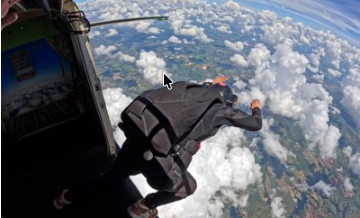
The sequence is designed so nobody gets to bypass the fear. You stand in the door, hands and feet in order, hanging into the wind stream while your body screams that this is wrong, and then you go.
My U.S. Army Airborne School training ran three weeks instead of three days: a week learning to hit the ground without breaking anything, a week on the towers, then jump week. By then, we were executing something we’d drilled a hundred times. Competence produced confidence, which is worth remembering before you throw someone into a role and call it a growth opportunity.
Chavez’s translation to the workplace is that “every person has a door,” a specific edge that feels like stepping into free fall. Most people are still sitting on the plane. They don’t raise a hand, pitch the idea, or ask to run the project they could run. The leader’s job is to know where each person’s door is, which requires knowing them well enough to identify it.
On a jump, the pounding heart makes sense. You expect it, so the fear stays legible. In an office, the same physiology shows up when the inbox stacks up, and nobody calls it fear. They call it stress, a busy week, or just email. Chavez’s instruction is to separate the story from the signals.
What Have You Packed in Your Parachute?
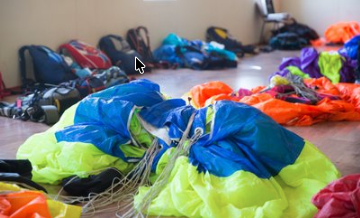
Nobody is meant to free-fall forever, which is the part leaders skip. Free fall is the sympathetic nervous system doing its job. Chavez has no interest in removing it, since that’s where growth happens. The problem is remaining there permanently, courtesy of back-to-back meetings and a phone that never stops, with no mechanism for pulling the canopy and slowing down.
The reserve chute matters too, and it has to be specific to the person. For example, a deep breathing exercise helped one executive regulate their nervous system, but caused another one to start hyperventilating. The person who hyperventilated tested other methods until they found one that worked for them: rubbing their fingertips together lightly enough to feel the ridges. Most people never collect the data on what puts them in free fall or what gets them out, so they carry a parachute packed for somebody else.
Chavez’s standard for anyone running a company is blunt, and she would put it in the job posting: “A regulated nervous system is part of the job description.” You’re paid for clear vision and moving through uncertainty.
“A regulated nervous system is part of the job description.”
Her closing claim is worth testing against your own team: courage is innate. Nobody has to install it. It gets trained out of people by criticism and the fear of looking foolish. That training happens somewhere. It happens at work. The question isn’t how to build courage in your people. It’s how to identify what your company built that keeps taking it out of them.