A basket that cost less than a dollar solved one of Chef Mickey’s biggest operational headaches. A gift that cost less than six dollars added roughly $75,000 a year to a carpet cleaning company’s revenue. Neither fix required a bigger budget, a new department, or a consultant’s six-figure invoice.
Vance Morris spent a decade inside Disney, including helping launch Chef Mickey’s, before taking the same principles to NASA, the Smithsonian, and a long list of small businesses that assumed great customer experience was something only companies with Disney’s resources could afford.

They were wrong, and the businesses Morris has worked with prove it daily. The line separating a forgettable business from one customers drive past two competitors to reach has almost nothing to do with money.
It has everything to do with whether an owner is willing to look closely at the boring, mundane parts of the operation and ask what a customer experiences there, not what the owner assumes they experience.
It is not the customer’s job to remember you.
The Cheapest Fixes Produce the Biggest Wow Moments
Morris traces the habit back to his first week at Disney, on the opening team of the Yacht and Beach Club Resort, staring at binders of training manuals for every job on the property. The lesson was never the paperwork. Disney runs every role on three components: what to do, how to do it, and why we do it that way.
Most businesses stop at the first two. The why is what turns a rule into something an employee believes, and belief is what shows up in front of a customer.
That framework produced the bus boy basket. Chef Mickey’s had one mission: move 400 guests through a character dining room in 43 minutes without making the meal feel rushed. Every department got the same question: what do you need to hit that number?
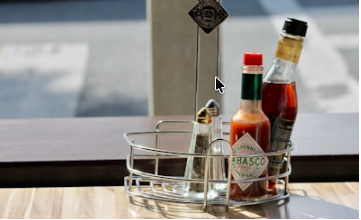
The bus staff said clearing tables took too long because sugar packets, salt shakers, and table tents all had to be picked up one at a time. A basket that gathered everything into a single motion saved about 23 seconds per table. Across hundreds of tables a night, a fix worth pocket change became the difference between hitting the mission and missing it.
The same logic scales up. An independent oil change shop competing against four other stations decided to stop racing to the bottom. The owner had already told himself the truth: “there’s no competitive advantage to being second cheapest.”
Instead of cutting prices further, he put his technicians in bow ties, added a barista station staffed by the same crew on rotation, and turned the wait into an experience instead of a delay.
The shop now charges 45 percent more than its closest competitor, and the only real new expense was a coffee machine. Everything else, including the uniforms, the shop already owned.
Why Do 80 Percent of Owners Believe They Deliver Great Service When Only 8 Percent of Customers Agree?

Morris cites a study, now about two years old, that asked business owners whether their company delivers great service. Eighty percent said yes. Researchers then asked the customers of those same companies the identical question, and only 8 percent agreed. That gap does not close on its own, and it rarely gets discovered by accident.
Part of the problem is structural. Inside most organizations, distance separates the moment a customer interacts with a frontline employee from the moment that information reaches the owner. Employees inside that gap have every incentive to sand down bad news before it travels upward, because delivering it honestly risks blame or worse. The result is a boss who genuinely believes 80 percent of customers are happy, built entirely on secondhand reports from people protecting themselves.
The phone confirms the same blind spot at scale. When Morris partnered with a call center to research 4,000 home service companies, all of them paying for placement on Google Ads, he found that only 17 percent answered the phone live. Everyone else lost the caller to the next name on the list.

Morris has no objection to automation for a solo operator who physically cannot answer mid-job, but he is blunt about where the human option belongs on the menu: first, not buried behind twelve choices nobody wants to sit through.
Morris closes his own version of that gap with a comment card that skips every layer of management and lands directly at his house. He has owned a mold remediation company, an oriental rug washing business, and a carpet cleaning company in Maryland for 19 years.
In that time, the card has surfaced a genuine complaint only a handful of times. That is not proof his service is flawless. It is proof that when feedback has nowhere to hide, an owner learns what is happening instead of what employees assume he wants to hear.
Retention Is Cheaper Than Everyone Pretends

Morris runs the math on his own carpet cleaning business without flinching. It costs him $136 to land a new customer, covering the ad spend, the phone answer, and everything else required to turn a stranger into a client. It costs him $23 a year to keep an existing one. The instant he retains rather than replaces a customer, he is more than a hundred dollars ahead, yet most owners build marketing budgets that spend almost entirely on acquisition and almost nothing on the people who already paid them.
That thinking shapes the process his carpet cleaning technicians follow before they ever touch a stain. They park on the street instead of the driveway, so an oil leak never becomes the homeowner’s problem. They knock instead of ringing the bell, because “friends knock and salespeople ring.”
They hand over a gift that costs less than six dollars, a bottle of spot remover, a small bag of cookies, and a note with Morris’s personal cell number. That gift alone drove a 26 percent increase in mid-tier package sales, worth roughly $75,000 a year, and it took close to a year of small adjustments to get right.

Morris draws a hard line between that kind of loyalty and the punch card kind. “It is not the customer’s job to remember you,” he says, and the responsibility runs the other way. Real loyalty means a customer drives past two competitors to reach you on purpose, not that they are hanging around for a tenth free coffee. A punch card is not loyalty. It is closer to a bribe with an expiration date.
None of this requires more information. Most owners are not short on ideas. They collect them from books, mentors, and their own frontline staff. Most of those ideas sit untouched. The only original line Morris will take credit for is blunt: “Won’t profit unless you implement.”

Pick one idea, even one borrowed from a completely different industry, and put it to work in your own business before moving on to the next one. A business that does something with one good idea will always outperform one that is still collecting them.