Most executives understand authority. They know where it comes from, how it is assigned, and what it allows them to do. What far fewer understand is why authority often fails at the exact moment leadership is supposed to matter most.
That distinction sat at the center of my conversation with Rabbi David Lapin. He has worked in environments where pressure was not theoretical. Political pressure, economic pressure, social pressure, and moral pressure all converged at once. In those conditions, leadership gets stripped down quickly. Position still exists. Power still exists. But people stop responding to titles alone and start looking for something deeper.
Lapin’s point was direct. Authority is granted. Character is built. One can be taken away. The other cannot.
Why Authority-Based Leadership Becomes Fragile Under Pressure
Reliance on authority alone makes leaders dependent on the people who gave them power in the first place. That dependence creates a quiet distortion. Instead of serving the organization, the customer, or the mission, leaders begin serving the people who can preserve their status. They manage upward. They protect perception. They become careful in the wrong places.
Most teams can feel this long before they can describe it. People can be fooled by what a leader says, but not by the energy behind it. They know when decisions are coming from conviction and when they are coming from fear. They know when someone is protecting a principle and when someone is protecting a position.
That is why some leaders lose credibility even while holding power. The title remains intact, but followership erodes.
What Is a Leadership Fingerprint?
One of Lapin’s most useful ideas is the leadership fingerprint. It is not a list of values framed on a wall. It is the small set of values a person has actually paid a price to uphold.
Most people claim similar values such as honesty, fairness, kindness, and respect. Those words are easy to say and difficult to live. The real question is not what a leader admires. It is what a leader has sacrificed for. That is where identity becomes visible.
A leader’s fingerprint is formed by the values that have survived discomfort, loss, tension, and tradeoffs. Two executives can both say they value honesty and behave very differently when honesty threatens a deal or a promotion. The difference is not in the language. It is in the price each is willing to pay.
This is also why leadership identity is less flexible than people assume. It is tempting to believe values can be rearranged like priorities on a planning sheet. In practice, the pattern is already embedded in past decisions. What matters is uncovering that pattern with honesty.
That discovery removes the illusion. It forces a leader to confront not what sounds right, but what has actually governed behavior.
Why Values Make Decisions Faster, Not Slower
There is a common assumption that values complicate leadership. Many believe they slow decisions and introduce unnecessary friction. The opposite is closer to the truth.
When a leader knows what cannot be traded away, decision-making becomes faster. It is not easier emotionally, but it is clearer. The internal debate shortens. Leaders who define their values in advance do not need to renegotiate them in the moment. They recognize the line and act. The cost may still be high, but the confusion is reduced.
This clarity also stabilizes teams. People trust leaders who are consistent at the level of principle, even when decisions are difficult. What erodes trust is not hard calls. It is selective integrity.
The Identity Question Most Leaders Avoid
When executives say they are struggling with leadership identity, the issue is often misdiagnosed. The real uncertainty is usually not about how to lead. It is about who they are when the role is stripped away.
Lapin framed identity in a practical way: look first at what you will not do.
That is a more reliable test than any stated aspiration. A person’s red lines reveal more than their ambitions. The same is true of organizations. Any company can describe what it wants to be known for. Far fewer can clearly state what it refuses to become. That refusal is where identity takes shape.
Modern executives are often asked to blur lines in subtle ways, not through obvious violations, but through small compromises that accumulate. Delay the truth. Protect the narrative. Preserve the metric. Reduce short-term disruption. A leader who has not defined clear boundaries in advance will almost always define them too late.
Ego Is Not Just Vanity. It Is Strategic Distortion.
Ego becomes dangerous when it places the leader back at the center of the story. Once that shift happens, decisions that should be measured against purpose are measured against personal impact. Recognition, security, reputation, and loss begin to influence judgment. The organization becomes secondary, even when the language of service remains intact.
This is where blind spots form: self-interest begins to distort perception. Highly capable leaders often fail at critical moments for this reason. They are not short on skill. They are constrained by what is at stake for them personally. Fear narrows judgment. The leader begins protecting the wrong outcome.
The correction is not to eliminate self-interest, which is unrealistic. It is to recognize it without allowing it to dominate the decision. That distinction separates leaders who can be trusted under pressure.
What Nelson Mandela Understood About Leadership That Most Executives Miss
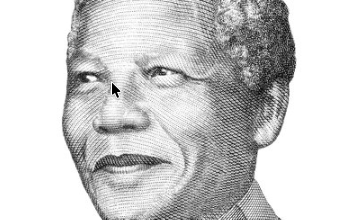
Lapin’s perspective on leadership was shaped in part by his work during the rebuilding of South Africa alongside figures such as Nelson Mandela. What stood out was not rhetoric or strategy, but presence.
Mandela did not rely on authority to create alignment. He carried a sense of dignity that was independent of position. That distinction is not abstract. It changes how a leader behaves when power is uncertain or contested.
He did not need recognition to validate his identity. Years in prison had already settled that question. When recognition came, it amplified who he already was rather than defining him.
That created a rare kind of influence. People did not respond out of obligation. They responded because they trusted the source of the decision.
Mandela also operated from a principle that most leaders struggle to hold consistently. Dignity cannot be taken. It can only be surrendered. That belief removes a significant portion of the fear that distorts decision-making under pressure. When a leader no longer treats dignity as something fragile, they become far less susceptible to compromise.
Why Moral Clarity Is Hardest When It Matters Most
The greatest test of leadership rarely comes during stable periods. It appears when pressure builds from multiple directions at once. Investors demand returns. Markets shift. Internal performance becomes uneven. In those moments, leaders face a dual responsibility. They must deliver results while ensuring that the path to those results does not compromise the organization’s core.
Lapin described this as the role of a shock absorber. A leader must absorb pressure from above without transferring that pressure in a way that distorts decision-making below. That requires a clear separation between outcomes and methods. Results matter. They cannot be ignored. But the choices that produce those results must still align with the organization’s deeper commitments. When that alignment breaks, performance may hold in the short term, but it rarely sustains.
The Discipline of Staying a Student
The most practical advice Lapin offered was also the simplest. Approach every interaction as a student. That posture changes the dynamic of leadership. It reduces defensiveness. It increases curiosity. It creates space for insight that would otherwise be missed.
People are far more willing to share what they know when they sense genuine interest. The quality of information improves. The depth of conversation improves. The leader gains access to perspectives that would not surface in a more transactional exchange.
This is not about humility as a virtue. It is about learning as a strategy.
Leaders who continue to learn from every level of an organization see more clearly. They adapt faster. They avoid the isolation that often comes with senior roles.
The Kind of Presence That Does Not Need Explanation
There are leaders who do not need to assert authority. Their presence carries weight before they speak. That presence is not personality. It is alignment. Identity, values, and behavior reinforce each other over time. There is no visible gap between what the leader stands for and how decisions are made.
People recognize that consistency quickly. They follow not because they are required to, but because they trust the integrity behind the direction.
That is the kind of leadership most organizations say they want. It is also the kind that cannot be produced through structure or policy. It is built through consistent choices, often made under pressure, where the easier path would have been to compromise.